
Have you ever been upset with yourself for always feeling tense? Or wondered why your chest tightens during stressful situations, even when nothing seems visibly wrong? Your body is hiding stories your mind never finishes telling. That’s the silent magic and profound remedy of trauma.
Trauma is like a pebble in your shoe: persistent, uncomfortable, and easy to ignore. For many people, trauma isn’t just in the past; it’s alive in the body and mind, shaping breath, movement, and daily habits. And that’s where yoga steps in, not as a cure-all but as a strong, comprehensive tool for healing.

The Body Stores Unresolved Pain
When we hear “trauma,” we frequently think of dramatic incidents—accidents, violence, or life-threatening conditions. However, trauma can also stem from chronic stress, emotional neglect, or major life changes. Hence, trauma can be physiological as much as psychological.
Your nervous system functions as a vigilant guard. When danger (real or perceived) arises, it triggers fight-or-flight and freeze responses. Ideally, once the danger passes, your system should return to normal. However, if trauma isn’t processed or stress is constant, the body can remain stuck on high alert. Muscles remain tense. Breathing becomes shallow. Emotional echoes persist.
The outcome? Anxiety, hypervigilance, disconnection, emotional numbness, or unexpected overwhelm. Even in safe situations, trauma makes your body feel unsafe.
Yoga as a Way to Reconnect
Yoga is more than just physical activity. Its philosophical roots are presence, breath, and awareness. Yoga becomes medicine when experienced through a trauma-informed perspective.
So, what’s trauma-informed yoga? Fundamentally, it’s a method that acknowledges trauma’s effect on the brain and nervous system and adapts traditional yoga to be safer and more accessible. In trauma-informed classes, instructors prioritize personal feeling over perfect alignment, use gentle language, and offer choices rather than instructions (e.g., “if it feels okay for you” instead of “do this pose now”).
This is important because trauma frequently disrupts connections rather than just memories. When the nervous system locks into survival mode, the brain’s circuits connecting the body and mind can be damaged. Since words live in one part of the brain and sensations in another, talking about trauma isn’t always enough. Trauma-informed yoga helps in reestablishing these connections.
Yoga is Physical and Relational
One of the most significant components of yoga and trauma recovery is the relationship you rebuild with your body. You learn to:
-
Slow down and observe what’s happening inside you at the moment.
-
Move without judgment.
-
Breathe in a way that signals your body, “This place is safe.”
-
Let your body guide you, and not let your mind suppress emotion.
-
Stand or sit with feelings you may have previously ignored.
This way, yoga becomes less about flexibility and more about freedom—freedom from the usual defenses trauma creates, like bracing, avoiding, numbing, collapsing, disconnecting. You start to sense what it feels like to be alive in your own skin.
Why Yoga Is Beneficial
Yoga’s therapeutic power isn’t just lyrical; it’s rooted in how it engages the nervous system.
-
It Controls the Nervous System
The parasympathetic nervous system, which controls digestion, rest, and regeneration, is activated by deep, conscious breathing. This lowers stress hormones and encourages healing by shifting you into “rest-and-digest” mode out of “fight-or-flight.”
-
Movement Releases Emotions
Sometimes the essence of healing isn’t speaking, it’s feeling. In yoga, when a pose opens an area that’s been holding tension for years (such as the hips or shoulders), it can release emotions that haven’t had a voice until that moment. People frequently report surprising emotional releases—tears, laughter, deep sighs—as they let stored tension go.
-
Rewires the Brain
Trauma can disconnect the cognitive brain from the emotional and sensory brain. Yoga’s blend of breath and movement helps integrate these systems. With time, the nervous system discovers that safety is possible, and triggers become more tolerable.
-
Increases Body Awareness
Trauma survivors frequently report feeling their bodies as separate from themselves, like a stranger living inside their skin. Yoga promotes reconnection: feelings of pressure, sensation, breath, and posture. This is a deep kind of bodily awareness that helps people feel present in their own bodies again.
Trauma-Informed Yoga: What it Looks Like in Practice
Trauma-informed yoga is gentle, considerate, and voluntary. Here’s how it stands apart:
-
Choice is central: You’re free to decide about your comfort, props, and movement.
-
Breath comes first: Slow, deliberate breathing is incorporated into movement to help control emotions.
-
No fixed correct posture: Rather than aiming for perfection, it’s about what feels supportive and secure for you.
-
Mind-body integration: Movement is paired with awareness, helping you to observe feelings without judgment.
-
Non-triggering language: Instructors avoid presumptions, pressure, or images that can trigger past trauma.
Rather than a one-size-fits-all flow, trauma-informed practice adapts to you, meeting you where you are.
Poses That Help Heal Trauma
While each person’s journey is different, some poses are commonly used in trauma-informed yoga:
-
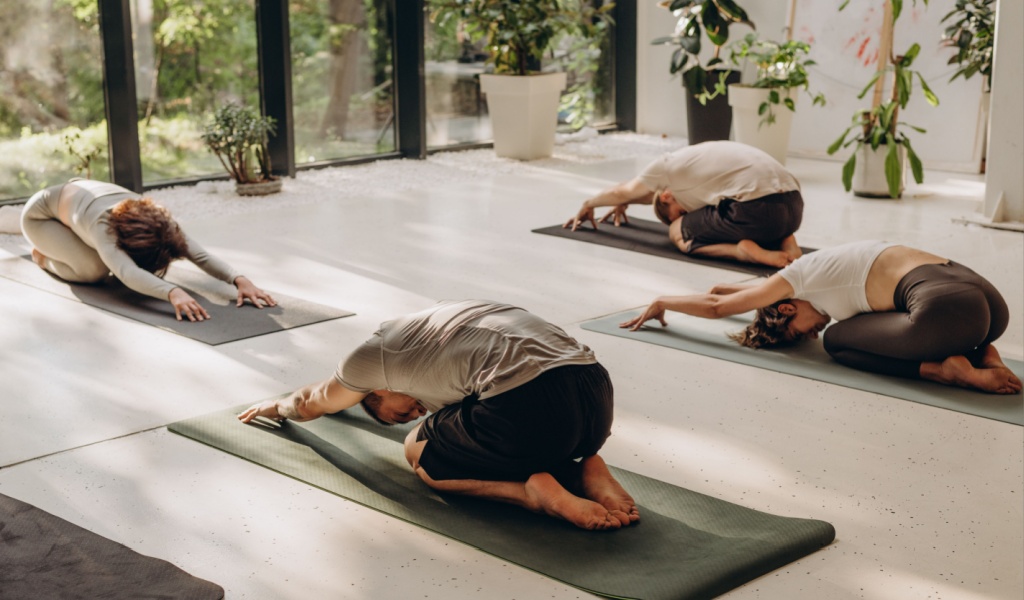
Child’s Pose: A soothing surrender that encourages the body to relax and inwardly observe.
-
Seated Forward Fold: A gentle inward fold for introspection and stress relief.
-
Legs Up the Wall: Restorative and soothing, excellent for anxiety or insomnia.
-
Heart-Opening Poses (e.g., Bridge): These can help reduce tension in the chest and shoulders, which are often held tight by emotional stress.
-
Savasana (Corpse Pose): This “final resting pose” may look inactive; however, it’s one of the most effective ways to help the nervous system completely relax.
In trauma recovery, less is more. Holding poses with deliberate breath and awareness can be more powerful than deep, dramatic stretches.
Yoga and Other Therapies Together Are Stronger
Yoga isn’t a replacement for therapy or professional assistance when trauma is severe and complicated. Rather, it’s a helpful companion to talk therapy, somatic therapy, and other healing practices.
For many individuals, combining yoga with counseling provides tools for processing emotions and building resilience in daily life. Yoga releases what’s stored in the body, and therapy helps make sense of the narratives held in the mind.
Not A Destination, But A Journey
Healing from trauma, physically and mentally, takes time, patience, and compassion. Yoga is a practice that teaches you to show up for yourself with interest rather than worry, and with presence rather than avoidance.
If trauma caused distance between your mind and body, yoga provides a bridge. It invites you to come home to your breath, feelings, and story—slowly, gently, and with increasing openness.
Thus, take a breath on your mat. Observe what’s there. And trust that with each mindful inhale and exhale, you’re curing more than just muscles; you are healing connections, safety, and self-awareness.